
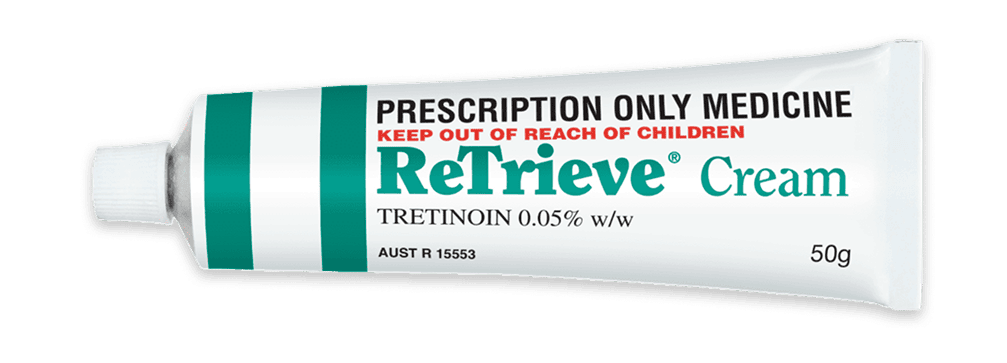
ReTrieve
(Tretinoin 0.05%)
Help patients face photodamage
head-on with tretinoin, Australia’s
gold-standard topical therapy.1-4
83% of Australian adults(20-54 yrs) have moderate-
to-severe photoageing*5
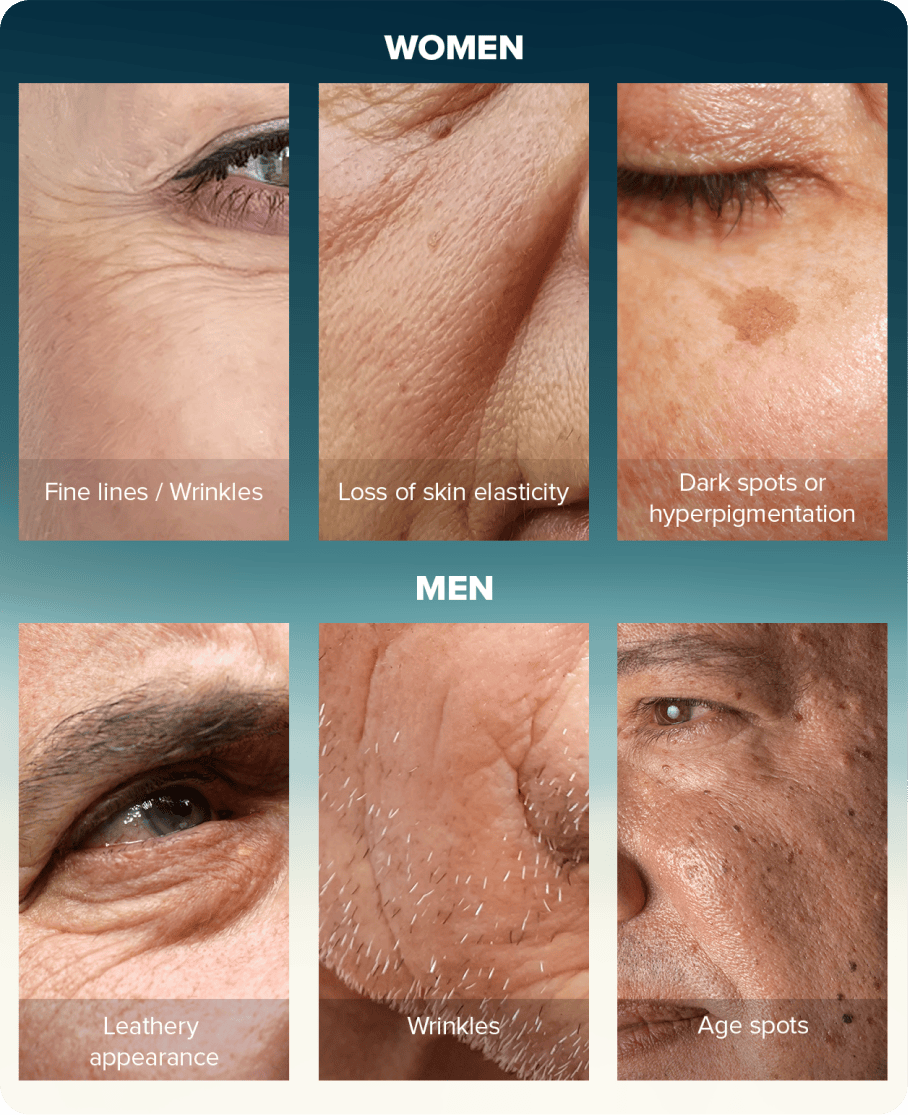
What skin concerns are top of mind for patients facing early photodamage?6

SKIN TEXTURE
Women of all ages are concerned about wrinkles and rough, dry skin, while men over 40 are more concerned about rough, dry skin (49%) than wrinkles (25%).†6

SKIN TONE
Women aged 40+ years also worry about pigmentation changes and 1 in 3 men worry about age spots and dark spots.†6
Compared with women from other countries,
Australian women reportedly experience more severe
facial lines and greater degree of change with age,
with the appearance of moderate-to-severe signs of
photoageing 10 to 20 years earlier.‡7
ReTrieve
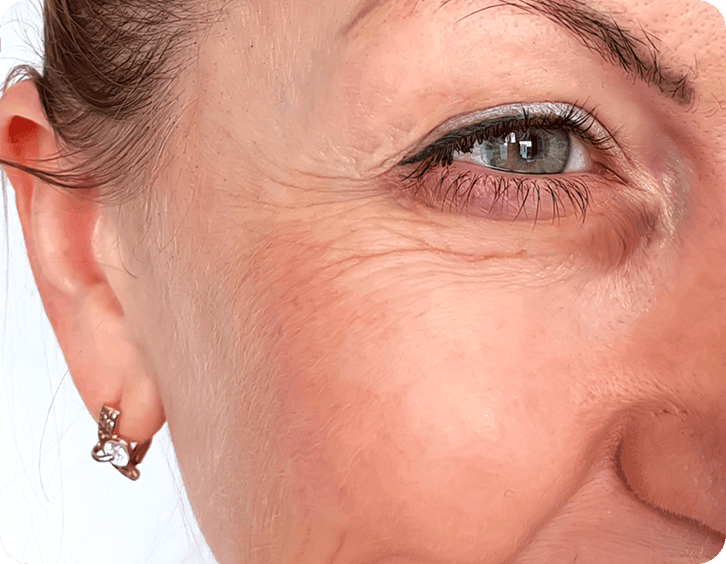
for Dry Photoaged Skin
ReTrieve is indicated for adjunctive treatment of dry photoaged skin and related conditions.1
ReTrieve
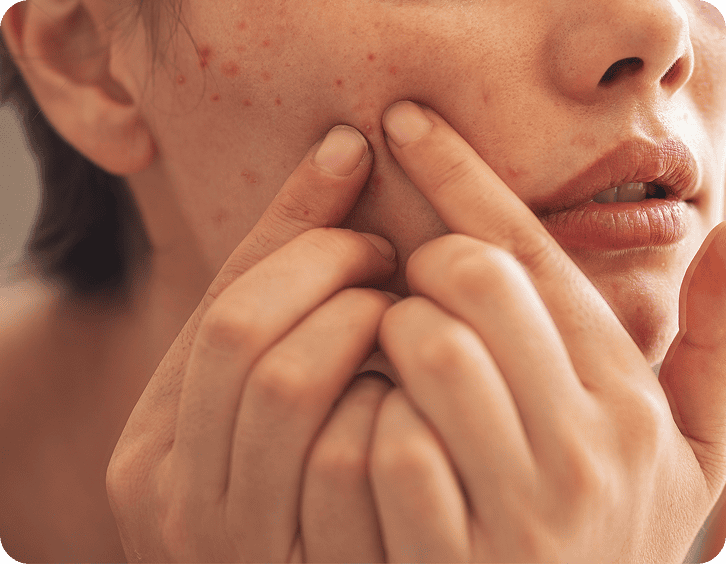
for Acne
ReTrieve is indicated for the treatment of acne vulgaris, in
particular forms where comedones, papules and pustules predominate in patients 12 years of age and older. It is
not generally effective in most cases of severe pustular or nodulocystic acne.1
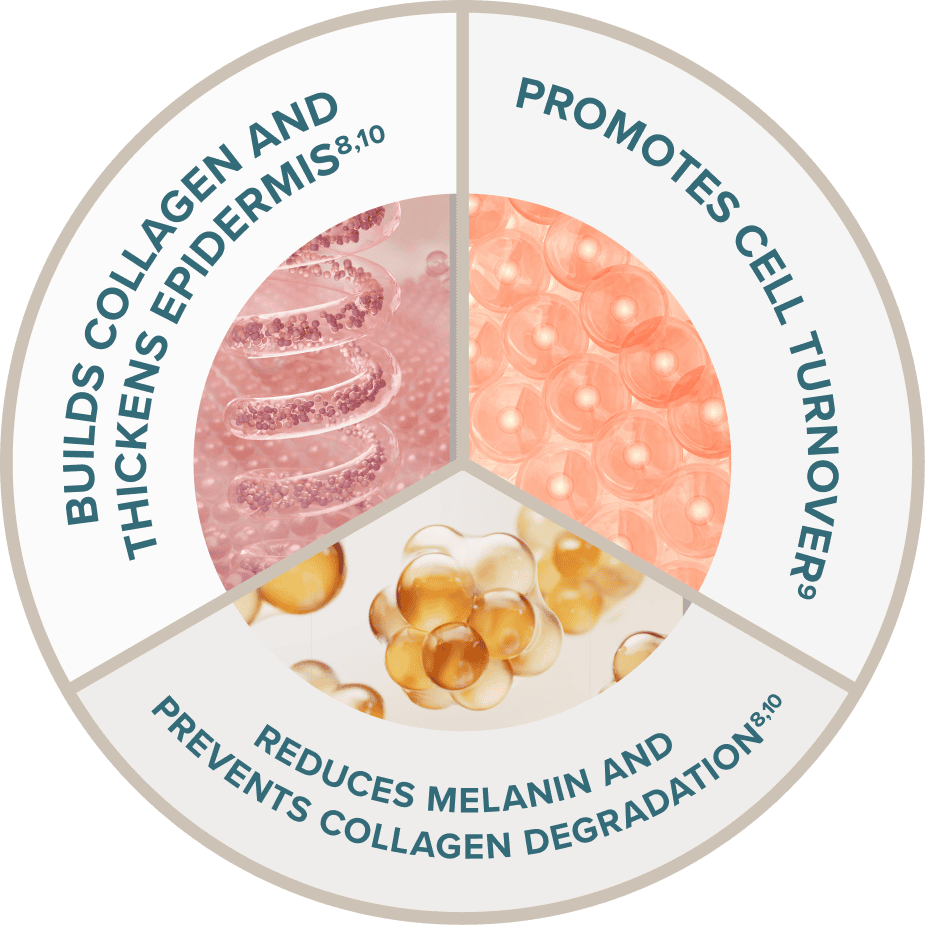
Tretinoin is the gold
standard topical therapy
to help reverse early signs
of photoageing and
ReTrieve is the only
prescription tretinoin cream
approved in Australia for
photoageing1-4,10

The most potent, biologically active retinoid (retinoic acid) indicated for photoageing3,13

Restores skin to significantly improve histological^ and visible signs of photodamage from 4 months, including wrinkling, hyperpigmentation, and skin texture4,8,10,14

Proven tolerability and safety with up to 4 years of continuous treatment4,10,15
Help patients reverse early signs
of photodamage with ReTrieve.1
*Cross-sectional study of 1400 men and women aged 20 to 54 years living in Queensland using surface microtopography on backs of hands showed 83% had moderate to severe photoageing (grades 4-6), with odds of higher grades of photoageing significantly increased by ~14% with every year of age from 30 to 54 years (p<0.001).5
†Data from an online market research survey conducted in December 2022 of 1000 Australian adult women (aged 20-75 years, n=800) and men (aged 40-75 years, n=200) who were concerned with photoageing or related conditions. Women of all ages were concerned with fine lines and wrinkles (63%-77%) and rough, dry patches (43%-59%), while women aged 40+ years (n=300) were more concerned than women aged 20 to 39 years (n=500) about pigmentation changes including melasma 28% vs 12%-19%, respectively, and lentigines 38% vs 7%-12%, respectively.6
‡Cross-sectional online survey of 1472 Caucasian and Asian women with Fitzpatrick skin types I, II, and III aged 18 to 75 years living in Australia, Canada, the United Kingdom, and the United States of America. Participants self-rated facial features against photonumeric rating scales of facial lines and volume-related changes.7
^Histological evaluation showed significantly (p = 0.0074) increased facial procollagen synthesis without causing atypia, dermal elastosis, or other adverse histological changes compared to placebo.#14
#Prospective randomised placebo-controlled trial of tretinoin 0.05% for photodamage: Investigator-assessed clinical and histological effects of tretinoin emollient cream 0.05% (n=101) vs vehicle emollient cream (n=103) applied to entire face once per day for up to 2 years in 204 adult women (n=183) and men (n=21) with moderate to severe facial photodamage.14
ReTrieve safety information
Contraindications: Pregnancy, or women planning a pregnancy. ReTrieve should only be given to women of childbearing potential that are using effective contraception correctly during treatment and for 1 month after discontinuation of treatment. Hypersensitivity to tretinoin or any of the ingredients in the formulation.1
Adverse effects: In dry photoaged skin: Mild irritation, peeling, erythema and slight stinging. Temporary hyperpigmentation or hypopigmentation. Increased sensitivity to UV light. In acne vulgaris: Application site erythema, skin exfoliation, pain of skin, application site pruritus, skin irritation, skin tenderness, skin burning sensation, application site stinging, dry skin.1
Refer to the full Product Information for full information safety and precautions.1
References
1. ReTrieve® (tretinoin) Product Information. 2. The Australian Register of Therapeutic Goods. Search: “Tretinoin”. Available from: https://www.tga.gov.au/ (accessed May 2026). 3. Milosheska D, Roškar R. Adv Ther 2022;39(12):5351-5375. 4. Sitohang IBS, et al. Int J Womens Dermatol 2022;8(1):e003. 5. Green AC, et al. Dermatology 2011;222(1):74-80. 6. Data on file. Retinoid Market Landscape 2022. 7. Goodman GJ, et al. Australas J Dermatol 2018;59(2):108-117. 8. Mukherjee S, et al. Clin Interv Aging 2006;1(4):327-348. 9. Motamedi M, et al. J Cutan Med Surg 2022;26(1):71-78. 10. Bhawan J. Int J Dermatol 1998;37(4):286-292. 11. Yoham AL, Casadesus D. Tretinoin. [Updated 2023 Mar 27]. In: StatPearls [Internet]. Treasure Island (FL): StatPearls Publishing; 2026 Jan-. Available from: https://www.ncbi.nlm.nih.gov/books/NBK557478/ (Accessed June 2026). 12. Liu PT, et al. J Immunol 2005;174(5):2467-70. 13. Siddiqui Z, et al. Am J Clin Dermatol 2024;25(6):873-890. 14. Kang S, et al. Am J Clin Dermatol 2005;6(4):245-253. 15. Bhawan J, et al. J Dermatol Sci 1996 Mar;11(3):177-82.
PBS Information
RETRIEVE is not listed on the PBS.
Please review the Full Product Information (PI) before prescribing. To have a copy of the PI sent to you, telephone 1800 630 056. Click for RETRIEVE PI.
August 2026. AU-2026-07-0060